New video: Accessing Secure Data Remotely via Linux & ThinLinc
EOSC-SIESTA builds a trusted cloud framework for sensitive data. Partner Cendio’s ThinLinc lets researchers work remotely while data stays inside the secure enclave. Read more..
EOSC-SIESTA Begins Its FIDELIS Support Offer on Privacy-Preserving Data Release
EOSC-SIESTA delivers FIDELIS Support Offer #2, a hands-on training on privacy-preserving data release and trustworthy publication, running from September to October 2026. Read more..

4th EOSC SIESTA webinar. Responsible Data Management: Legal Frameworks and Ethical Standards
Explore the ethical and legal foundations of responsible data management on September 18, 2026. This fourth webinar introduces the main ethical perspectives and legal frameworks shaping the responsible use of data in research, with special attention to the new European Health Data Space. Read more..
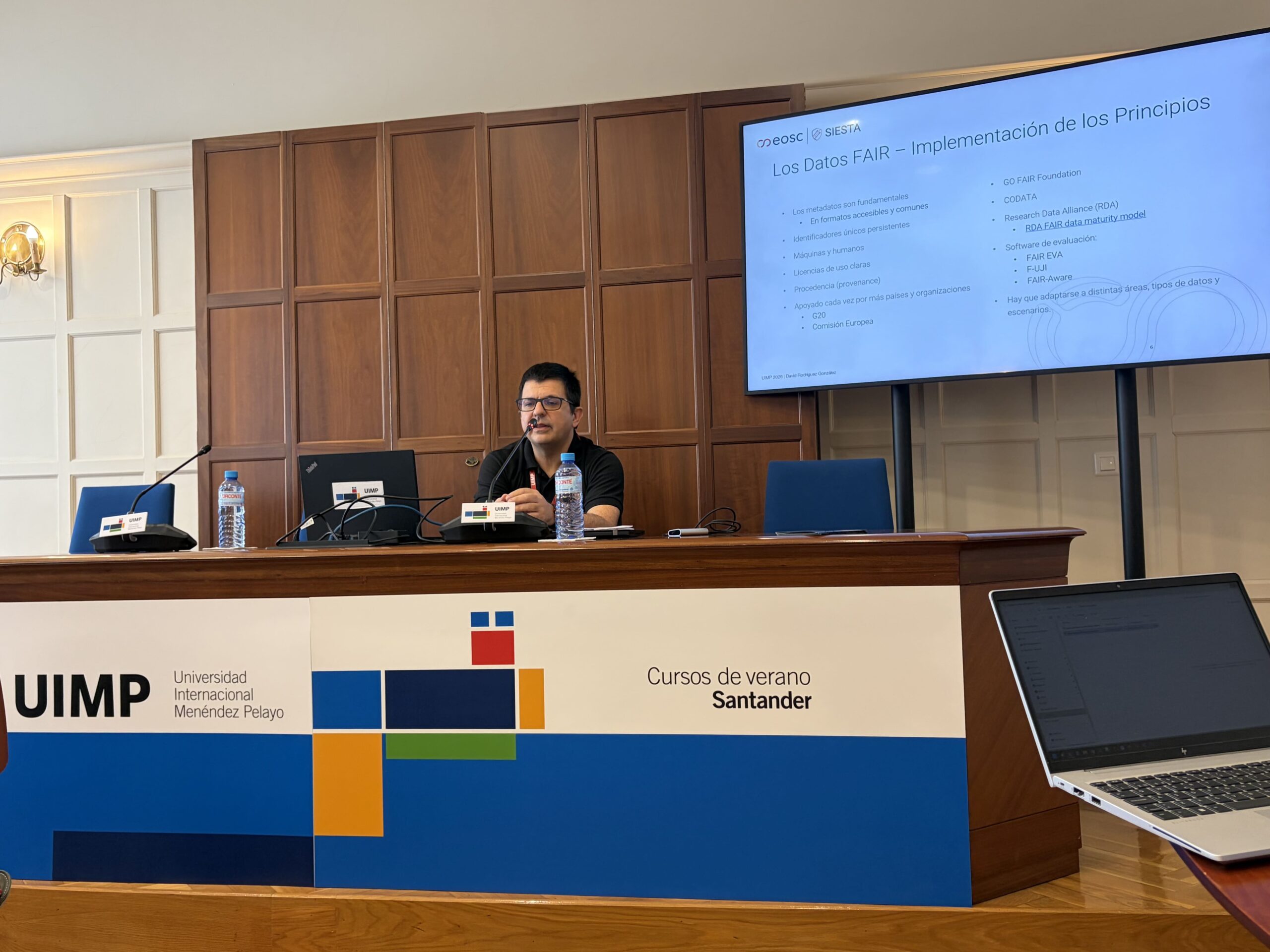
SIESTA at the UIMP course “Data in the scientific space: a journey from creation to knowledge”
David Rodríguez (IFCA) presents SIESTA’s trusted environments for sensitive-data research at the UIMP course “Data in the scientific space”. Read more..
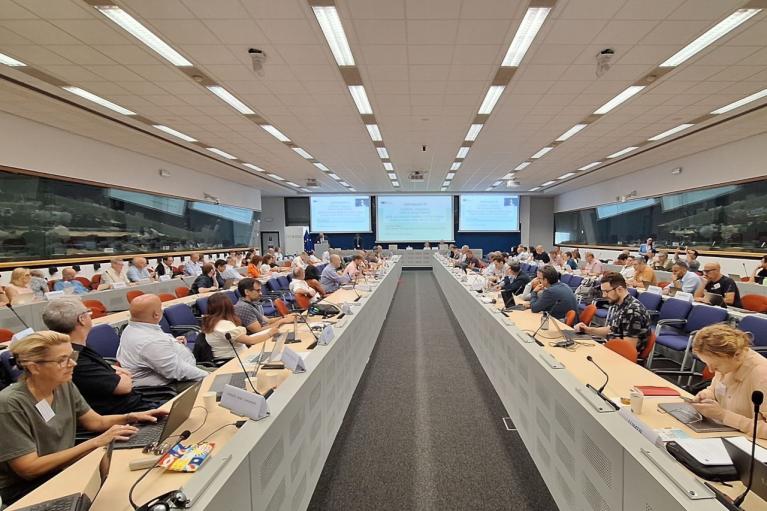
EOSC-SIESTA at the 2026 EOSC Coordination Meeting in Brussels
The EOSC-SIESTA project took part in the fifth annual EOSC Coordination Meeting, held in Brussels on 8–9 July and hosted by the European Commission, alongside 33 other Horizon Europe-funded projects. During the meeting, Álvaro López García and Judith Sáinz-Pardo Díaz presented, on behalf of SIESTA, a success story on scaling cross-project collaboration between AI4EOSC, SIESTA… Read more..
SIESTA Concepts #5: Named Entity Recognition
Sharing cyber incident reports aids threat detection, but they contain personal data that must be anonymised. Since the Named Entity Recognition models behind anonymisation are usually trained in English, EOSC SIESTA researchers tested them on Spanish and found that multilingual models trained on target-language reports work best. Read more..
SIESTA tool: DatLeak
DatLeak is a tool developed by the Neurobiology Research Unit (NRU) at Copenhagen University Hospital and available through the SIESTA Dashboard. It detects data leakage in anonymized datasets: when a dataset is randomized or scrambled, the resulting variables can still carry traces of the original values that could link a record back to a real… Read more..
SIESTA Synergies: EOSC-SIESTA at the TESSERA Final Event
On June 26th, 2026, EOSC-SIESTA will participate in the final event of the TESSERA project, joining the session dedicated to sibling projects and related initiatives to present a comprehensive overview of the project goals, tools, and capabilities. Read more..
SIESTA tool: BIDScramble
BIDScramble is an open-source tool developed by Radboud University within the EOSC-SIESTA project to facilitate the secure reuse of sensitive neuroimaging data. It transforms BIDS-formatted datasets into anonymous scrambled versions that maintain original structural and statistical properties. Read more..
SIESTA Tool: Dashboard
The EOSC-SIESTA Dashboard is the main interface connecting the project’s technical infrastructure with its practical research use cases. Based on Onyxia, this unified platform features a modular service catalog, MinIO S3-compatible storage, and a secure secret-management system, allowing researchers to safely access and analyze sensitive datasets. Read more..



